
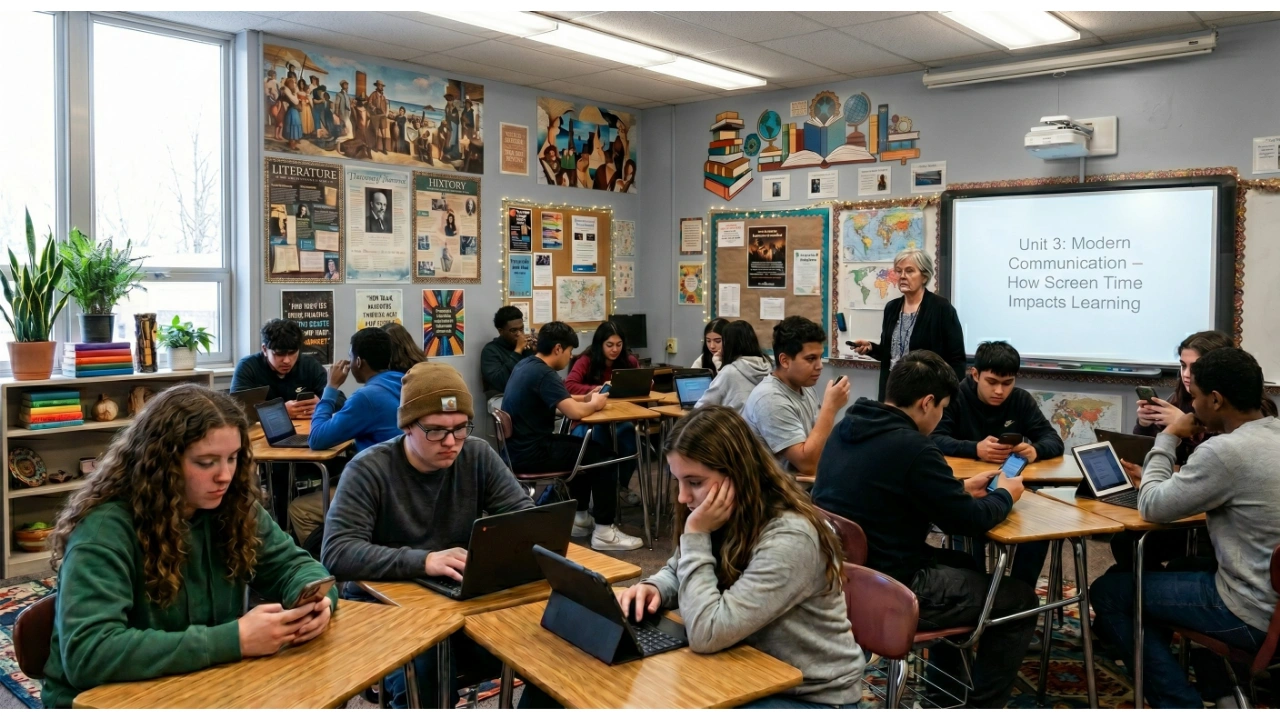
The average student now spends over 6.5 hours a day on screens. Not studying. Just scrolling, streaming, and switching between apps.
CDC data shows spend 4+ hours a day on non-school screens.
That number keeps climbing. And the research on what it's doing to student learning isn't pretty.
The problem isn't screens themselves. It's the recreational overuse that quietly chips away at how well students focus, sleep, think, and feel.
Impact Area | What's Happening | Source |
|---|---|---|
Attention & focus | Media multitasking linked to lower grades and more distraction | |
Cognitive development | Excessive recreational use tied to weaker working memory | |
Sleep | 42% of high-screen-time students report poor sleep quality | |
Mental health | 1 in 4 teens with 4+ hours daily screen time show anxiety or depression symptoms |
First, Your Attention Span Takes a Hit
Picture this: you sit down to study. Ten minutes in, you check Instagram. A notification pops up. Then you're watching a video. By the time you get back to your notes, 40 minutes have gone.
Sound familiar?
That's the displacement effect. Screens don't just distract you; they eat time that would otherwise go toward:
studying
sleeping
doing something useful
According to the , media multitasking (doing two or more digital activities at once) is linked to increased distraction and lower grades. Students reach for their phones mid-study for the emotional hit that textbooks just don't give them.
The kicker? Every time you switch tasks, it takes time to refocus. That gap adds up fast.
A found that each extra hour of daily screen time corresponds to a 10% drop in the likelihood of reaching higher academic levels, consistent across both genders.
Second, Your Brain Gets Overloaded
A 2025 study in the found that increased daily screen exposure is negatively linked to attention, working memory, and cognitive control in school-age students.
The culprits: cognitive overload and rapid task-switching between stimulating content and slow, demanding academic work.
Cognitive Function Scores by Daily Screen Time
Source: Journal of Clinical Medicine (2025)
Low Screen Time (< 2 hrs/day)
High Screen Time (7+ hrs/day)
Attention & Focus
88%
42%
Working Memory
85%
48%
Cognitive Control
91%
37%
Watching fast-paced short videos for an hour, then trying to read a dense textbook chapter, is like sprinting and then being asked to do yoga. Your brain is wired for speed and isn't ready to slow down.
A student averaging 7 hours of daily recreational screen time found their reading comprehension had dropped noticeably within weeks.
Consider a typical second-year university student who found themselves completely unable to get through two paragraphs without zoning out. After checking their screen time settings, they cut their recreational device use down to 2 hours a day outside of class. Within two weeks, their attention span bounced back, and they could read for long stretches without losing focus.
Executive functions (focus, working memory, self-control) are the mental tools that make learning possible. Heavy recreational screen use chips away at all three.
Then Your Sleeping Habits Start to Suffer
This one is often the missing piece.
During July 2021 through December 2023, half of teenagers aged 12–17 had 4 or more hours of non-school daily screen time, according to the CDC's . That same report found that about 1 in 4 teenagers with 4 or more hours of daily screen time experienced anxiety or depression symptoms in the past two weeks.
Blue light from devices delays melatonin production. Notifications keep your brain alert. And stimulating content, even a "quick" scroll, ramps up your nervous system right before bed.
Studies published by the NIH show an incredibly direct link between devices and sleep: as screen time goes up, overall sleep quality for students plummets down at a nearly identical rate. In fact, when researchers tracked a group of medical students over three months, they found that losing just an hour of sleep a night (dropping from 6.8 to 5.9 hours) caused their test scores, mental reaction times, and short-term memory to worsen across the board. The data proved that a student's sleep duration, all by itself, is a direct predictor of how well they will perform academically.
Imagine a high school senior who was averaging only five hours of sleep a night during midterm season because they stayed on their phone until 1:00 AM. Their grades slipped in subjects they usually excelled in. The root cause wasn't a lack of studying or effort; it was sleep deprivation actively blocking their brain from storing the information. Turning off devices by 10:00 PM for two weeks completely restored their school performance.
According to , good sleep is a first-line support for attention and cognitive development in young people.
Simple rule: No screens for at least an hour before bed. Keep devices out of the bedroom if you can.
Social and Emotional Development Suffers
Heavy screen use doesn't just mess with your grades. It affects how you feel, and how you connect with people.
Research published in (July 2025) using self-reported teen data from the National Health Interview Survey found that teenagers with higher non-schoolwork screen use were more likely to experience infrequent physical activity, depression symptoms, anxiety symptoms, insufficient peer support, and an irregular sleep routine.
The published findings in June 2025 showing a feedback loop: screens increase emotional and behavioral problems, and those problems push students back to screens for comfort. That's a hard cycle to break.
You feel anxious about an assignment, so you scroll to feel better. An hour later, you feel worse and the assignment is still there. The screen became the avoidance tool, not the solution.
Research in (2025) also found that social anxiety and loneliness drive smartphone addiction in college students. The lonelier you feel, the more you use your phone, and the more you use your phone, the lonelier you often end up feeling.
Take the example of an international student who, during their first year abroad, started spending over 8 hours a day on their phone messaging people back home. While they felt digitally connected to their old life, they became totally isolated on their new campus. Recognizing that the phone was briefly masking a social gap rather than fixing it, they swapped the device for a physical study group, immediately reducing their loneliness.
What You Can Actually Do

Quitting screens entirely isn't the goal. Using them with intention is.
Step 1
Phone in another room
Set study sessions where your phone is out of reach, not just face-down.
Step 2
Set app limits
Use screen time controls to cap social media and video.
Step 3
Stop screens before bed
Put devices down at least an hour before you sleep.
Step 4
Go offline once a day
Replace one scroll session with something offline: a walk, a conversation, a book.
Step 5
Talk to someone
If you're struggling emotionally, reach out to a person rather than your phone.
Worth noting: Academic screen time (watching lectures, reading PDFs, doing research) correlates positively with performance. The harm is recreational overuse, especially passive scrolling and video consumption. Your laptop open to course notes isn't the problem here.
Don't Let Your Phone Cost You Your Grades
Screen time and student learning are connected in ways most students don't notice until it shows up in their grades, their sleep, or their mood. Recreational overuse hurts focus, weakens memory, disrupts sleep, and feeds anxiety. You don't have to quit your phone, but being intentional about when you use it makes a real difference.
 How AI Trackers Spot Struggling Students Before They Fail
 How Students Are Reaching Top Colleges Without Traditional Admission
 Choosing a College Based on Lifestyle and Location
 Why Most Student Achievement Strategies Fail Without the Right Systems
 Is a U.S. 3-Year Degree Worth It?